
Your hands are sweaty. Your heart is racing. Everyone is looking at you, waiting for you to say something.
Sound familiar?
If public speaking makes you nervous, you are not alone. Millions of people feel the exact same way, even people who look calm and confident on stage. The good news is that public speaking is a skill, not a talent you’re born with. That means anyone can learn it, including you.
In this guide, we’ll break down what public speaking really means, why it matters, the fears that hold people back, and simple, practical ways to speak with confidence. No fancy jargon. Just real advice you can start using today.
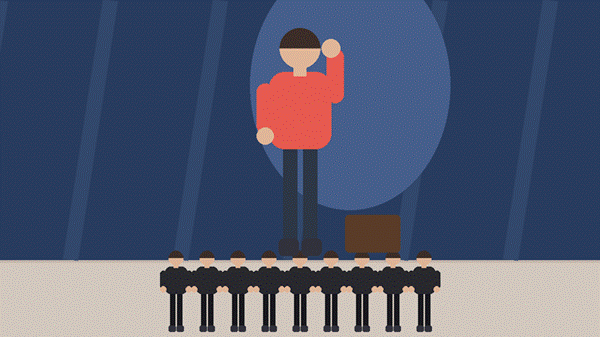
Public speaking is a skill anyone can learn with the right practice.
What Is Public Speaking?
Public speaking simply means talking to a group of people to share information, ideas, or a message. It can happen in many settings:
- Giving a presentation at work
- Speaking at a wedding or family event
- Answering questions in a classroom
- Leading a team meeting
- Speaking on a podcast or video
Basically, if you’re communicating with more than one person at a time, that’s public speaking. It doesn’t have to be a big stage with hundreds of people. Even talking to five coworkers in a meeting counts.
Why Public Speaking Is Important
Public speaking isn’t just for teachers, politicians, or motivational speakers. It’s a life skill that helps in almost every area of your life.
Here’s why it matters:
- Career growth: People who can speak clearly and confidently are often seen as leaders. This can help with promotions, job interviews, and networking.
- Better communication: Learning to speak well also improves how you write, explain ideas, and have everyday conversations.
- Confidence in daily life: Once you get comfortable speaking in front of others, you naturally feel more confident in social situations too.
- Influence and connection: Good speakers can inspire people, share important ideas, and build trust quickly.
Think about a teacher who explains a hard topic so well that it suddenly makes sense. Or a coworker who gives a presentation that gets everyone excited about a new project. That’s the power of public speaking.
Common Public Speaking Fears (And Why They Happen)
Before we talk about solutions, let’s understand the problem. Fear of public speaking, sometimes called glossophobia, is one of the most common fears in the world. In fact, some surveys show people fear it even more than they fear death.
Here are the most common fears people have:
1. Fear of Judgment
Many people worry about being judged. “What if they think I’m boring?” or “What if I sound stupid?” This fear comes from caring too much about other people’s opinions.
2. Fear of Forgetting Your Words
You prepared everything, but what if your mind suddenly goes blank in front of everyone? This is a very common fear, especially for beginners.
3. Fear of Physical Symptoms
Shaky hands, a trembling voice, sweating, or a racing heart. These physical signs of nervousness can make people feel even more anxious, creating a cycle of fear.
4. Fear of Making Mistakes
Nobody wants to stumble over words or say something wrong in front of a group. But here’s a secret: audiences rarely remember small mistakes. They remember how the speaker made them feel.
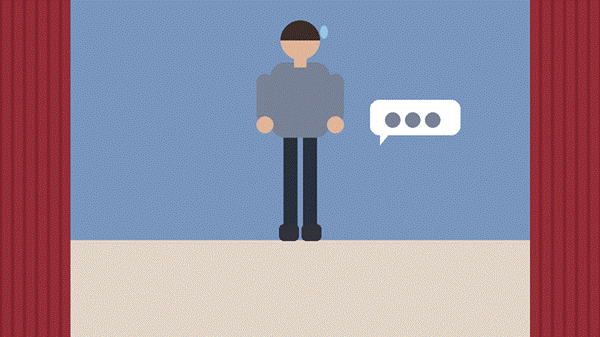
Feeling nervous before speaking is completely normal, even for experienced speakers.
How to Overcome the Fear of Public Speaking
Now let’s talk about solutions. These are simple, practical steps that actually work.
1. Prepare, But Don’t Memorize Word-for-Word
Know your topic well, but avoid memorizing every single sentence. If you forget one word, your whole speech can fall apart. Instead, learn the main points and speak naturally around them.
2. Practice Out Loud
Reading your notes silently is not the same as practicing out loud. Practice in front of a mirror, record yourself, or practice in front of a friend or family member. The more you say it out loud, the more natural it becomes.
3. Start Small
You don’t have to jump straight into speaking in front of 100 people. Start with small groups, like family, friends, or a small team meeting. As you build confidence, take on bigger audiences.
4. Focus on Your Message, Not Yourself
Instead of thinking “What will people think of me?”, shift your focus to “How can I help this audience?” When you focus on giving value to others, your nervousness naturally decreases.
5. Use Breathing Techniques
Before speaking, take a few slow, deep breaths. This calms your nervous system and reduces shaky hands or a racing heart. Try breathing in for 4 seconds, holding for 4 seconds, and breathing out for 4 seconds.
6. Accept That Mistakes Are Normal
Even professional speakers stumble sometimes. If you make a small mistake, smile, pause, and continue. Most people won’t even notice unless you point it out yourself.
Practical Tips to Improve Confidence, Voice, and Body Language
Once you’ve worked on your fear, it’s time to build strong speaking skills. Here are practical tips broken down by category.
Building Confidence
- Prepare well: Confidence comes from preparation. The more you know your topic, the calmer you’ll feel.
- Visualize success: Before speaking, picture yourself doing well. This simple mental trick can reduce anxiety.
- Celebrate small wins: Every time you speak in public, even briefly, count it as progress.
Improving Body Language
Your body says a lot before you even open your mouth.
- Stand tall: Keep your shoulders back and stand with your feet shoulder-width apart.
- Use hand gestures naturally: Don’t keep your hands stiff at your sides. Let them move naturally as you talk.
- Avoid crossing your arms: This can make you look closed off or nervous.
- Move with purpose: If you’re on a stage, walking slowly and calmly can look more confident than standing frozen in one spot.
Controlling Your Voice
- Speak slower than you think you should: Nervous speakers often rush. Slowing down makes you sound more confident and helps the audience understand you better.
- Use pauses: A short pause after an important point gives your audience time to absorb it. It also makes you look more in control.
- Vary your tone: A flat, monotone voice can put people to sleep. Change your tone to match your message, exciting parts should sound exciting.
Making Eye Contact
Eye contact builds trust and connection with your audience.
- Look at different sections of the room, not just one person.
- Hold eye contact for about 3-5 seconds per person before moving to someone else.
- If eye contact feels too intense, look slightly above people’s heads or at their foreheads. It looks the same from their side.
Engaging Your Audience
- Ask questions: Even simple ones like “Has anyone here experienced this?” gets people involved.
- Tell stories: People remember stories much more than facts and numbers. A short, relevant story can make your speech unforgettable.
- Use simple language: Avoid complicated words. Simple, clear language keeps your audience engaged and easy to follow.
- Read the room: If people look confused or bored, adjust your pace or add an example to bring their attention back.

Strong body language and eye contact make your message more convincing.
A Real-Life Example
Think about someone like a new employee giving their first team presentation. At first, their voice shakes, and they read directly from their slides. But after a few months of practice, feedback, and small speaking opportunities, that same person becomes the one leading big client meetings with ease.
This transformation doesn’t happen overnight. It happens through consistent, small steps, exactly like the tips shared above.
Even well-known public speakers and TED talk presenters once struggled with the same fears you might be feeling right now. The difference is they kept practicing, even when it felt uncomfortable.

Growth in public speaking comes from consistent practice, not natural talent.
Quick Recap: Public Speaking Checklist
Before your next speech or presentation, remember these key points:
- Prepare your main points, don’t memorize word-for-word
- Practice out loud multiple times
- Use deep breathing before you start
- Stand tall with open body language
- Speak slowly and use pauses
- Make eye contact across the room
- Tell a story or ask a question to engage your audience
- Accept that small mistakes are okay
Conclusion
Public speaking can feel scary at first, but it’s a skill anyone can build with practice. Every confident speaker you admire today once felt nervous, shaky, and unsure, just like you might feel right now.
Start small. Practice often. Focus on your message rather than your fear. Over time, speaking in front of others will feel less like a scary task and more like a normal part of your life.
So here’s your call to action: pick one small opportunity this week, whether it’s speaking up in a meeting, sharing an idea with friends, or practicing in front of a mirror, and just go for it. That one small step could be the start of your journey to becoming a confident public speaker.
Frequently Asked Questions (FAQ)
Q1: Is being nervous before public speaking normal?
Yes, completely normal. Even experienced speakers feel nervous before speaking. The goal isn’t to remove nervousness completely, but to manage it so it doesn’t control you.
Q2: How can I stop shaking during a speech?
Deep breathing before speaking helps a lot. Also, holding something like note cards or standing behind a podium can give your hands something to do, which reduces visible shaking.
Q3: How long does it take to become good at public speaking?
It’s different for everyone, but with regular practice, most people notice real improvement within a few weeks to a few months.
Q4: What should I do if I forget what to say during a speech?
Pause, take a breath, and glance at your notes if you have them. A short pause feels much longer to you than it does to the audience.
Q5: Do I need to be naturally outgoing to be good at public speaking?
Not at all. Many great public speakers are naturally quiet or introverted. Public speaking is a learned skill, not a personality trait.