
Published under: Mental Health | Personal Growth | Self Improvement
Have you ever said something in anger and immediately wished you could take it back?
Or felt your whole mood ruined by one small thing — a rude comment, a bad email, or someone cutting you off in traffic?
You are not alone. Most of us were never taught how to handle our emotions properly. We were told to “calm down” — but nobody showed us how.
That is exactly what this post is about. Emotional control is one of the most powerful life skills you can build. It shapes your relationships, your work, your health, and how you feel about yourself every single day. And the best part? Anyone can learn it.
Let us break it down — simply and honestly.


What Is Emotional Control?
Emotional control is your ability to notice what you are feeling, understand why you feel it, and choose how to respond — instead of just reacting on impulse.
It does not mean you stop feeling things. You are not trying to become a robot. It means you are the one in the driver’s seat — not your emotions.
Think about the last time you stayed calm when things got tense. Maybe someone was rude and you chose not to engage. Maybe you got disappointing news and still handled it with a clear head. That was emotional control — and you already did it.
The goal is simply to do it more consistently, even when life gets hard.
 Plants of the Nile | How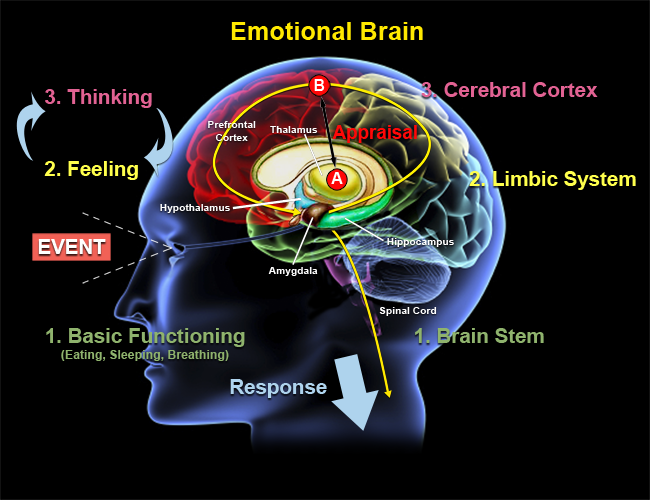


simplypsychology.org
Why Your Emotions Take Over (And Why It Is Not Your Fault)
Here is a little science — made very simple.
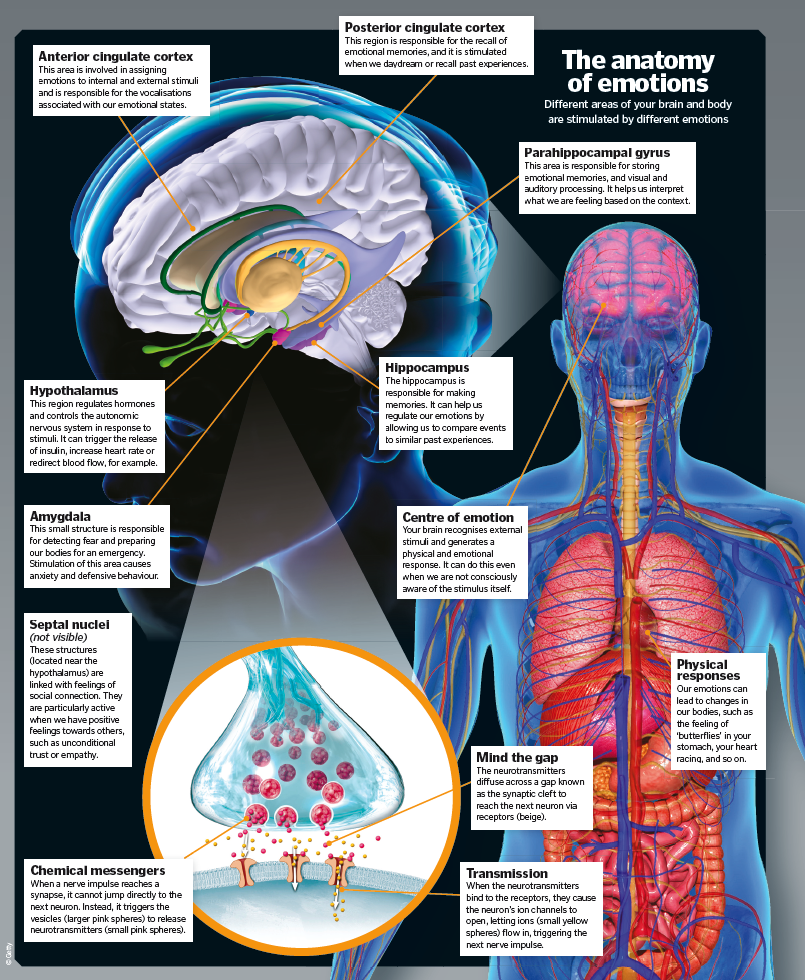
Your brain has a part called the amygdala. Think of it as your brain’s smoke alarm. It is constantly scanning for danger — physical or emotional.
When it senses a threat — like criticism, rejection, or a heated argument — it fires a stress response before your logical brain even has a chance to weigh in. This is why you:
- Snap before you think
- Say things you regret
- Feel your heart racing during a conflict
- Lie awake replaying conversations at 2am
Your brain is trying to protect you. It just does not always read situations correctly.
The good news? You can train your brain to pause before reacting. Neuroscience shows that consistent practices like mindfulness, journaling, and deep breathing literally rewire the brain over time. You are not stuck with how you currently respond.


positivity.org
Signs Your Emotions Might Be Running the Show
Most of us have more room to grow here than we realise. Some honest signs:
✔ You often regret what you said or did when you were upset
✔ Small things throw off your entire day
✔ You find it hard to have difficult conversations without shutting down or exploding
✔ You feel anxious or irritable without really knowing why
✔ You tend to blame others when things go wrong
✔ You replay arguments or stressful events over and over in your head
If these sound familiar — welcome to being human. These are not character flaws. They are habits. And habits can change.
6 Simple Ways to Build Emotional Control (That Actually Work)
These are not magic tricks. They take practice. But they genuinely work.
1. Name What You Are Feeling
This sounds almost too simple. But science backs it up strongly.
Research by neuroscientist Matthew Lieberman found that when you label an emotion — saying out loud or in your head “I feel angry” or “I feel scared” — its intensity immediately drops. Naming an emotion shifts brain activity from the reactive amygdala to the rational prefrontal cortex.
You cannot manage what you have not named.
Next time an emotion hits, stop and ask: What am I actually feeling right now? Angry? Hurt? Embarrassed? Scared?
2. Use the 6-Second Rule
An emotional hijack lasts roughly 6 seconds in the brain. If you can create even a brief pause — take a breath, count slowly, step away — you give your logical brain the time it needs to catch up.
Before you reply to that message. Before you say something in an argument. Before you make a decision you might regret — just wait six seconds.
It sounds incredibly small. It changes everything.


healthcouncilcanada.ca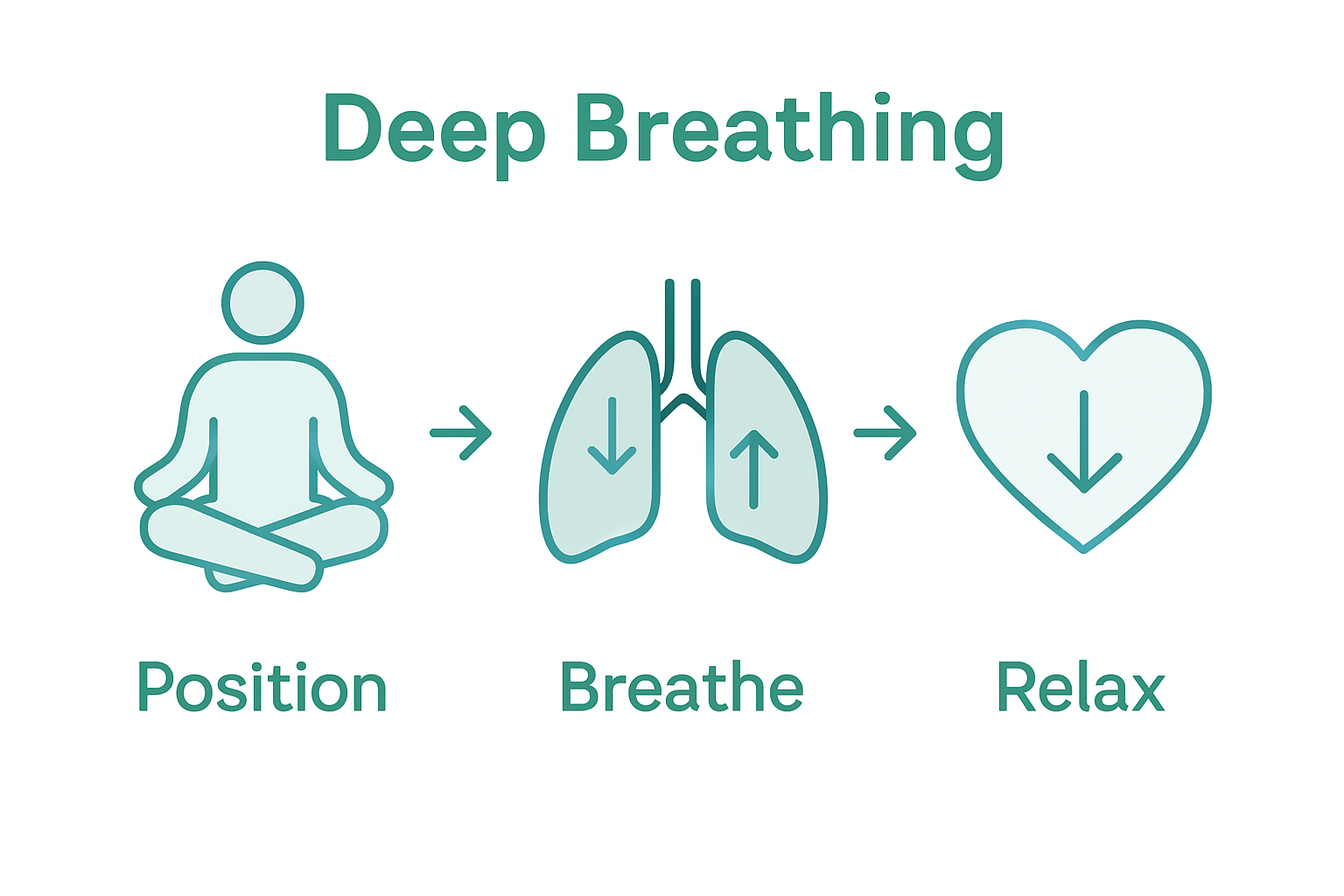

3. Try Box Breathing
This is a technique used by Navy SEALs before high-stress missions. It also works brilliantly for everyday life.
Here is how to do it:
- Inhale slowly for 4 counts
- Hold your breath for 4 counts
- Exhale slowly for 4 counts
- Hold for 4 counts
Repeat this twice. That is less than 2 minutes.
Box breathing activates your parasympathetic nervous system — your body’s built-in calm-down switch. Your heart rate slows. Your thoughts clear. You feel genuinely more in control.
Use it before a tough conversation, during a stressful meeting, or any time you feel emotions rising fast.
4. Keep a Private Journal
Write it out — not to post online, just for you.
When something bothers you, write exactly what happened and how you felt. Be honest. Be messy. It does not need to make sense. No one will read it.
Over time you will start to see patterns — the same triggers, the same reactions, the same thoughts going in circles. That awareness is where real change begins.
You are not just venting. You are studying yourself. And that is powerful.
 Mindful
5. Question the Story You Are Telling Yourself
When an emotion hits, your brain instantly creates a story to explain it.
“They did not reply to my message because they do not respect me.”
“My boss gave me feedback — I must be failing.”
“Nobody actually understands me.”
Here is what you need to know: that story is not always true. It is just the first explanation your brain grabbed — often the most dramatic one.
Ask yourself: Is this definitely true? What else could explain this?
Most of the time there is a much simpler, less dramatic answer. The person was probably just busy. Your boss wants you to grow. That is genuinely it.
Challenging your own narrative is one of the most effective emotional tools you have.
6. Take Care of Your Body — It Is Not Optional
This one sounds boring. It is actually critical.
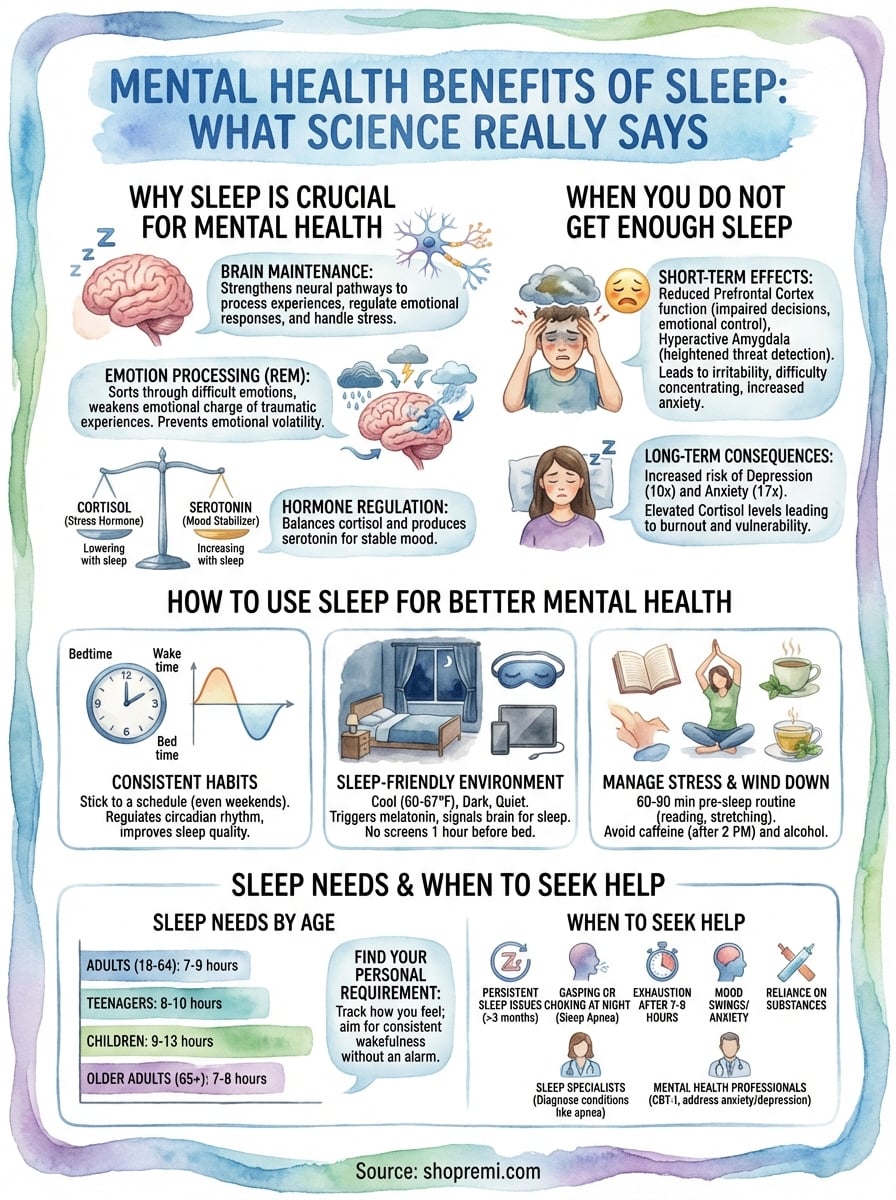
Research shows that sleep-deprived people have an amygdala that is 60% more reactive than when they are well-rested. You literally cannot regulate your emotions well when you are tired, hungry, or not moving your body enough.
- A 20-minute walk reduces cortisol — the main stress hormone
- Good sleep resets your emotional baseline every night
- Even drinking enough water affects your mood and focus more than most people realise
You cannot manage your emotions with a depleted body. Taking care of yourself is not a luxury — it is the foundation.
shopremi.com

Small Daily Habits That Build Emotional Control Over Time
You do not need a massive overhaul. You need small, consistent actions repeated daily.
Morning check-in (2 minutes)
Before you check your phone, sit quietly and notice how you feel. Not to fix anything — just to observe. This sets your emotional awareness for the whole day.
The pause before you reply
When an upsetting message or email arrives, give yourself at least 5 minutes before responding. What feels urgent almost never is.
One win at night
Before sleep, think of one moment during the day where you chose your response instead of just reacting. Teach your brain to notice progress — not just slip-ups.
Give yourself grace
You will have bad days. You will react instead of respond sometimes. That is completely normal and human. Self-compassion is not making excuses — it is what makes tomorrow’s attempt possible.

stockcake.com
stockcake.com
What Emotional Control Looks Like in Real Life
It is your boss criticising your work in a meeting and you saying — “Thank you, can we discuss this in more detail later?” — instead of getting defensive or going quiet.
It is your partner snapping at you when they are stressed and you thinking — “This is about how they feel right now, not about me” — and choosing not to snap back.
It is a stranger being rude to you and you shrugging it off instead of letting it ruin the next two hours of your day.
Emotional control is not one big dramatic transformation. It is hundreds of small moments where you choose differently than you did before.
Frequently Asked Questions
Is emotional control the same as suppressing your emotions?
No — and this is really important to understand. Suppressing emotions means pushing them down and pretending they are not there. That usually leads to bigger explosions later or quiet resentment building up. Emotional control means you acknowledge what you feel and consciously choose how to express it. You feel the emotion — you just do not let it make your decisions for you.
Can children learn emotional control?
Yes, absolutely — and teaching it early is one of the greatest gifts you can give a child. Simple practices like naming feelings out loud, taking deep breaths when upset, and talking about emotions build emotional intelligence that stays with them for life.
How long does it take to improve?
Most people notice real changes within 4 to 6 weeks of consistent practice. The brain is neuroplastic — it genuinely changes and adapts with repetition. Small daily habits add up faster than most people expect.
What if my emotions feel completely out of control?
Please take that seriously. If your emotions are significantly affecting your relationships, work, or daily life, speaking with a therapist or counsellor is one of the wisest and most emotionally intelligent things you can do. There is no weakness in asking for help — there is only growth.
The Bottom Line
Emotional control is not about becoming less human. It is about becoming more intentional with your humanity.
Your feelings are valid. Every single one of them. The goal is not to get rid of them — it is to stop letting them make your most important decisions for you.
Every time you pause before reacting. Every time you name a feeling instead of acting it out blindly. Every time you choose your response with intention instead of impulse — you are building a skill that quietly changes everything.
Start small. Be patient with yourself. And remember — the fact that you want to grow is already the first step.
Found this helpful? Share it with someone who needs it today.
Focus keyword: Emotional Control
SEO Tags: emotional control, how to control emotions, emotional intelligence, manage emotions, stop reacting, mindfulness, stress management, self awareness, personal growth, mental health tips